
If you’re running a business in 2025, sustainability is no longer a marketing initiative.
It is a compliance requirement.
Across Europe and beyond, environmental and ESG reporting is becoming mandatory - and even companies not legally required today are being pressured by investors, banks, and enterprise clients.
The problem ?
Most businesses still manage sustainability data through :-
• Spreadsheets
• Manual consolidation
• Disconnected systems
• No audit trail
Odoo 19 introduces a dedicated ESG (Environmental, Social & Governance) module that replaces manual reporting with structured, automated, and audit-ready tracking.
This isn’t just reporting software.
It’s compliance infrastructure.
❖ Why ESG Reporting Is Now a Business Risk Issue
Companies must report on :-
• Environmental impact
• Social responsibility metrics
• Governance transparency
Even businesses not directly in scope are affected indirectly through :-
• Scope 3 supplier requirements• Investor expectations
• Bank financing criteria
• Public procurement standards
Waiting until reporting becomes urgent creates operational chaos.
Odoo 19 addresses this proactively.
❖ The Core Problem: ESG Data Lives Everywhere
In most organizations :-
• HR holds employee diversity and pay data
• Accounting tracks energy and utility costs
• Fleet systems record fuel usage
• Purchasing tracks supplier activity
This data is manually exported and merged into spreadsheets.
Resulting in :-
• High administrative burden
• High error risk
• No traceability
• Last-minute reporting stress
Odoo 19 eliminates this fragmentation.
❖ How Odoo 19 ESG Automates Sustainability Tracking
The ESG module integrates directly with existing Odoo modules.
When business activities occur, sustainability data updates automatically.
Examples :-
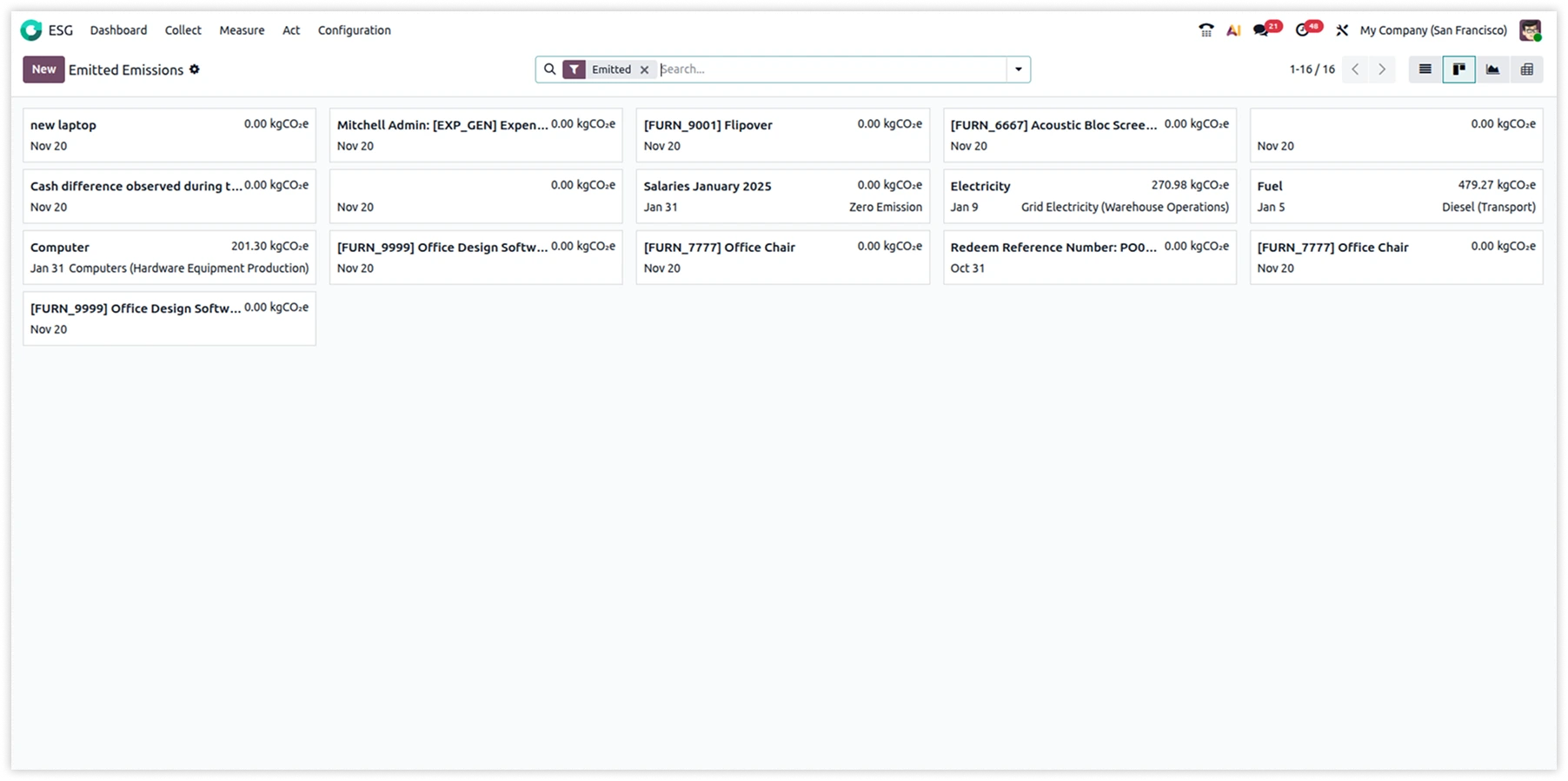
• An electricity bill posted in Accounting increases Scope 2 emissions
• Fuel logs from Fleet update Scope 1 emissions
• Supplier purchases contribute to Scope 3
• Payroll updates feed social responsibility metrics
There is no double entry.
Data flows automatically across systems.
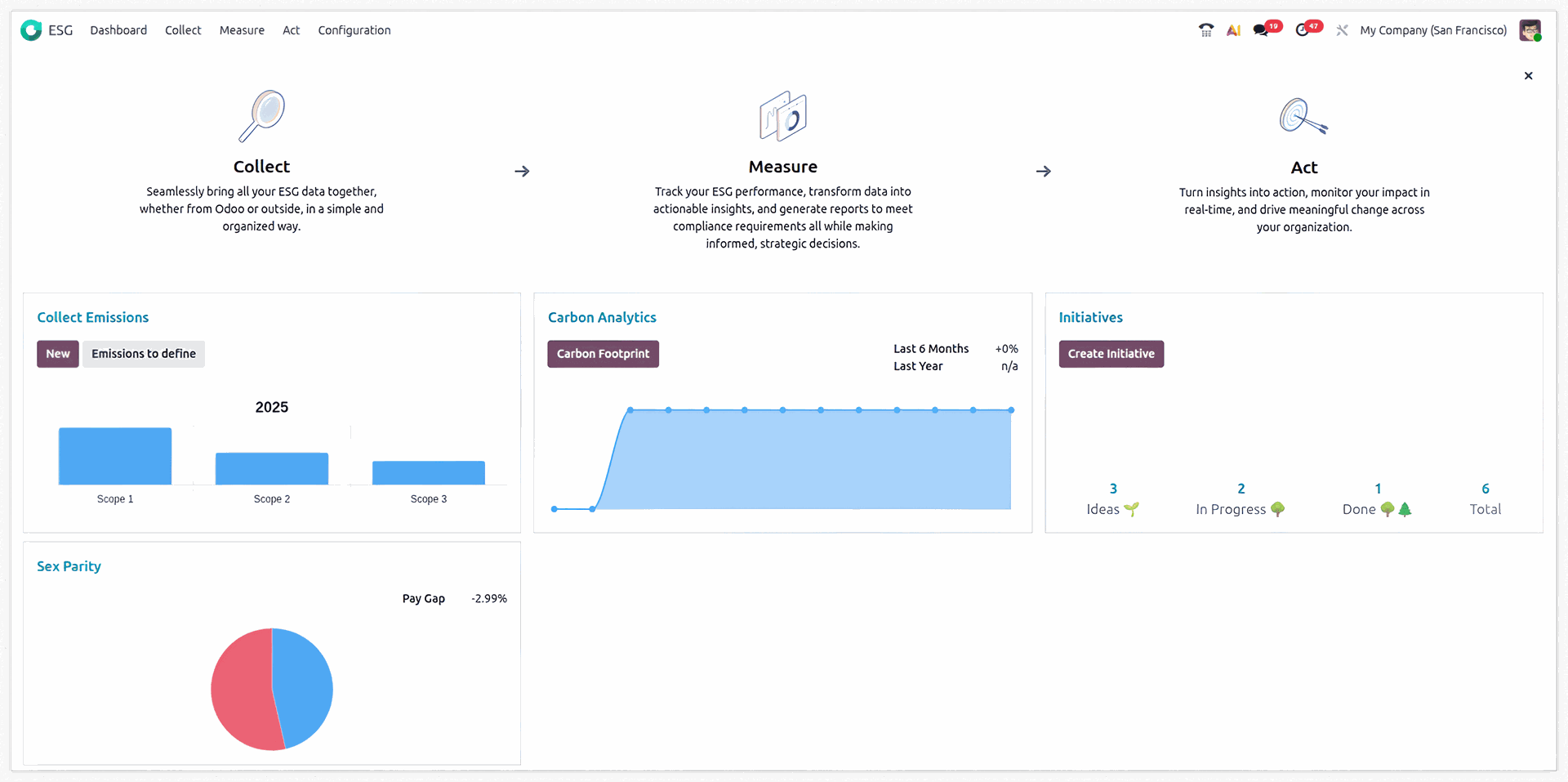
❖ Understanding Carbon Scopes (Without the Complexity)
Sustainability reporting follows three categories :-
Scope 1 - Direct Emissions
• Company vehicles
• On-site fuel usage
• Machinery emissions
Scope 2 - Purchased Energy
• Electricity
• Heating and cooling
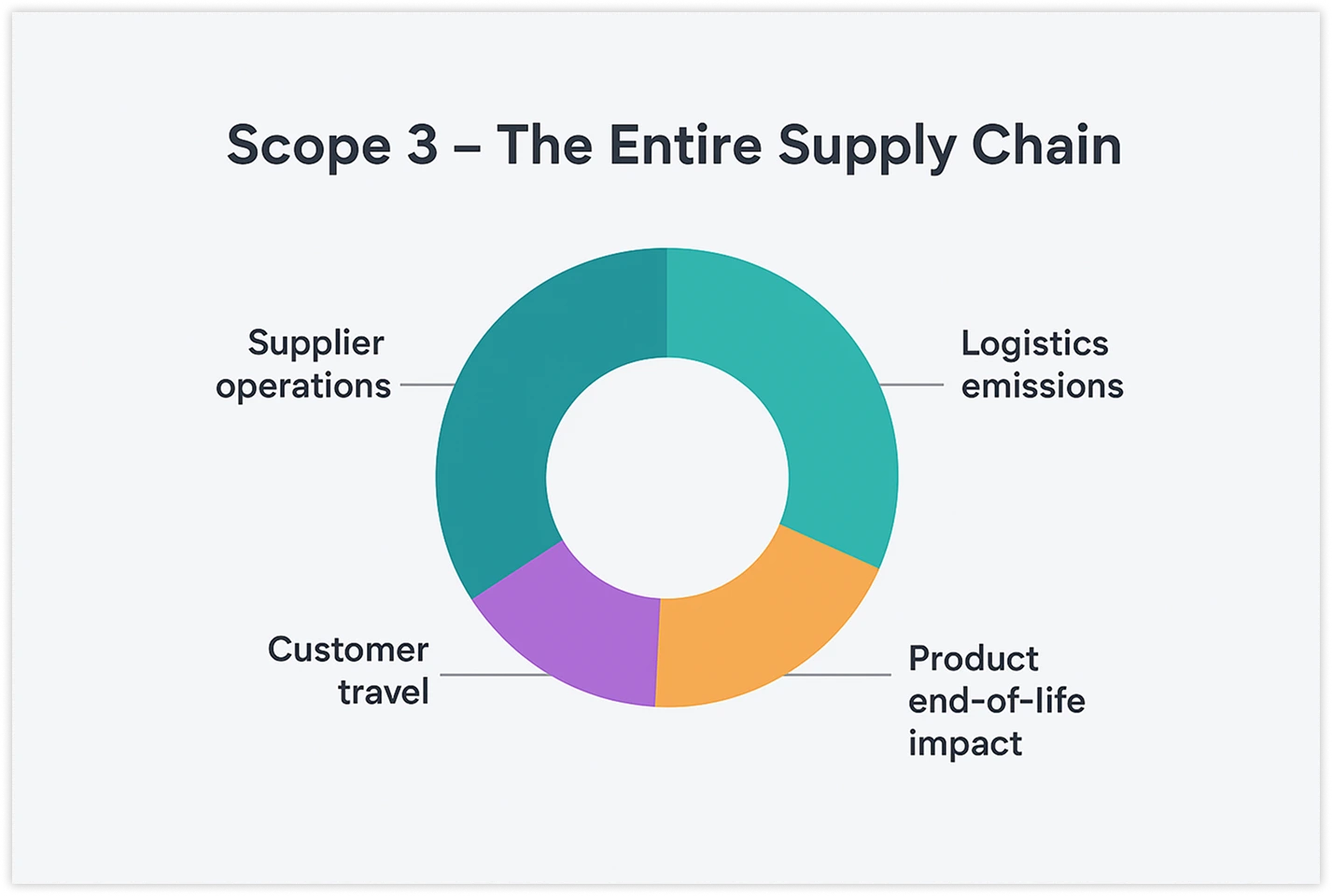
Scope 3 - Supply Chain Emissions
• Supplier operations
• Logistics
• Product lifecycle impact
• Business travel
Scope 3 is often the largest and hardest to track manually.
Odoo 19 categorizes activities automatically and calculates emissions in real time.
❖ Built-In Emission Databases (No Manual Research Required)
Emission calculations require standardized factors.
Odoo 19 includes recognized environmental databases such as :-
• ADEME
• IPCC
This ensures :-
• Scientifically validated calculations
• No manual emission research
• Audit-ready methodology
Accuracy is built into the system.
❖ AI-Assisted ESG Configuration
Setting up sustainability reporting can be overwhelming.
Odoo 19 includes AI assistance that :-
• Reads vendor purchase descriptions
• Suggests appropriate emission factors
• Speeds up historical data imports
This dramatically reduces setup complexity.
Especially useful during initial implementation.
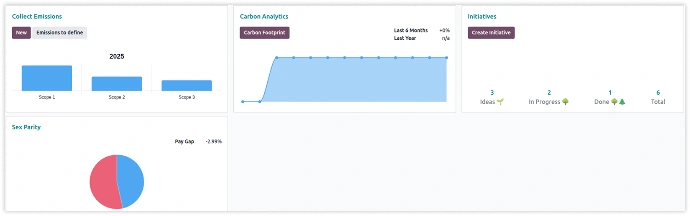
❖ Real-Time ESG Dashboards ( Not Annual Panic )
Traditional sustainability reporting happens annually - often reactively.
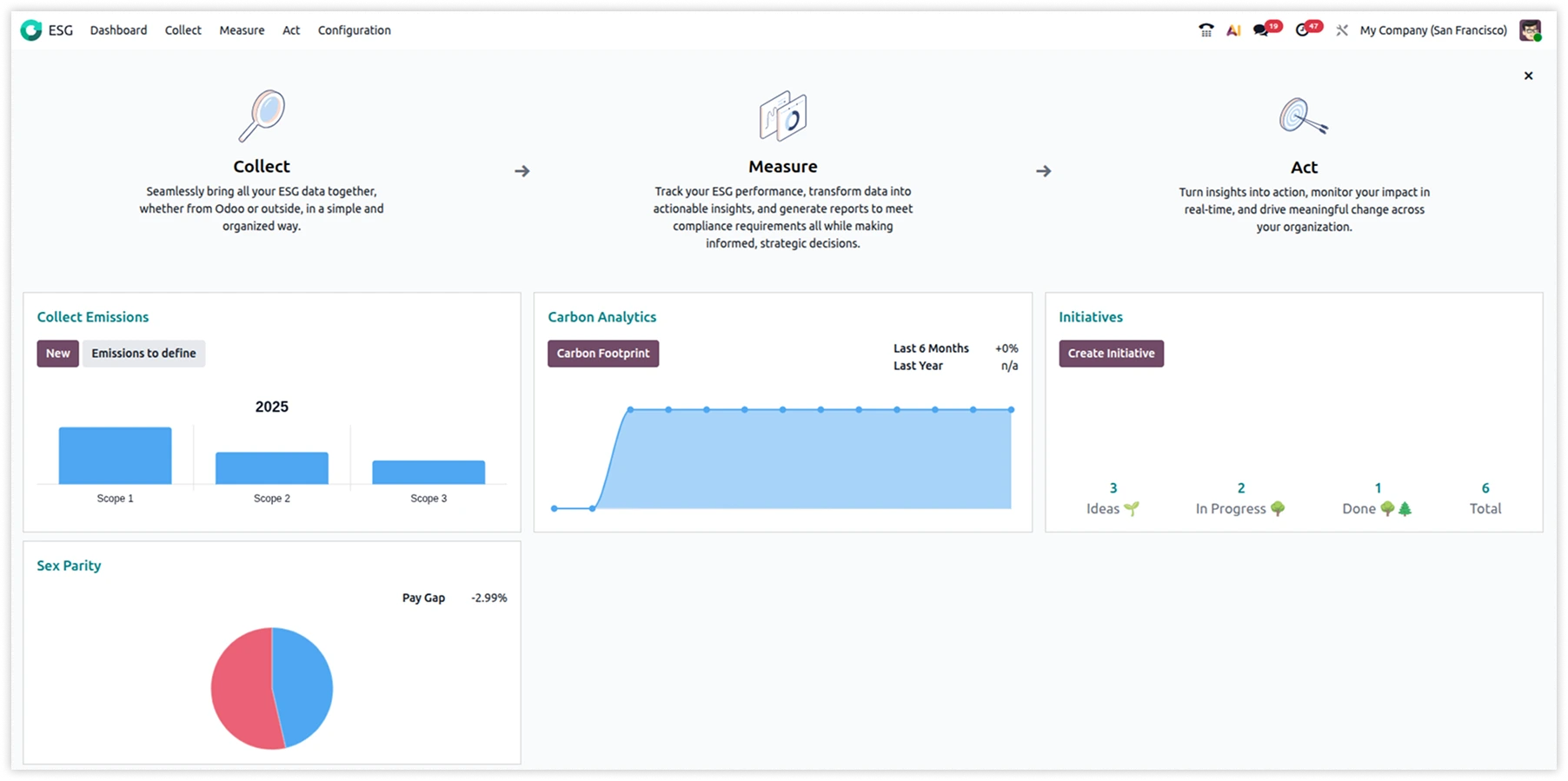
Odoo 19 provides live dashboards showing :-
• Current carbon footprint
• Emission trends
• Unexpected spikes
• Supplier comparisons
• Reduction target progress
This transforms ESG from compliance reporting into operational insight.
❖ Beyond Carbon : Social & Governance Metrics
Odoo 19 ESG tracks more than emissions.
Social Indicators
• Gender balance
• Pay equity
• Training & development
• Safety incidents
• Supplier diversity
Governance Indicators
• Board composition
• Risk management tracking
• Ethics & compliance reporting
This creates a complete ESG framework - not just environmental tracking.
❖ CSRD - Compliant & Audit-Ready Reporting
At reporting time, Odoo 19 generates :-
• Carbon footprint by scope
• Historical comparisons
• ESG scoring metrics
• Calculation methodology transparency
• CSRD-aligned reporting
• XBRL export files
Audit preparation becomes structured rather than chaotic.
This reduces reliance on external consultants purely for report formatting.
❖ Unexpected Business Benefits
Companies implementing structured ESG tracking report :-
✔ Lower energy costs
Visibility reveals inefficiencies.
✔ Stronger supplier negotiations
Data supports evidence-based discussions.
✔ Improved access to green financing
Banks increasingly evaluate ESG metrics.
✔ Talent attraction advantage
Employees prefer responsible employers.
✔ Reduced regulatory risk
Sustainability becomes a strategic asset - not just compliance overhead.
❖ Who Actually Needs Odoo 19 ESG ?
Legally Required For :-
• EU companies with 250+ employees
• Listed companies
• Financial institutions meeting size thresholds
Strategically Critical For :-
• Suppliers to large corporations (Scope 3 visibility)
• Businesses pursuing ESG certifications
• Companies seeking green loans
• Organizations preparing for regulatory expansion
- In practice :-
- Most businesses will need structured ESG tracking within the next few years.
- Early adoption reduces risk and builds advantage.
❖ Implementation Timeline
Typical ESG setup includes :-
1. Configuring carbon scopes
2. Verifying emission databases
3. Connecting Accounting, HR, Fleet, and Purchasing
4. Importing historical operational data
5. Setting reduction targets
6. Activating real-time dashboards
Most organizations complete implementation within 2–4 weeks.
The process is configuration-focused - not data-heavy manual work.
❖ Real Business Results
Organizations using Odoo 19 ESG report :-
• 80% reduction in sustainability reporting time
• Continuous visibility instead of annual panic
• Improved cross-department coordination
• Clear reduction strategy tracking
Most importantly:
Focus shifts from reporting → improving.
❖ Frequently Asked Questions
What is the ESG module in Odoo 19?
It is a dedicated Environmental, Social & Governance module that automates sustainability tracking and reporting.
Is Odoo 19 ESG compliant with CSRD?
Yes. It supports CSRD-aligned reporting structures and XBRL export.
Can Odoo automatically calculate carbon emissions?
Yes. It uses built-in emission databases like ADEME and IPCC to calculate emissions by scope.
How long does ESG implementation take?
Typically 2–4 weeks depending on company size and historical data requirements.
Does Odoo 19 track Scope 3 emissions?
Yes. It integrates supplier and purchasing data to calculate Scope 3 impact.
❖ Strategic Conclusion
Sustainability reporting is becoming mandatory infrastructure.
Without automation, it becomes :-
• Administrative burden
• Compliance risk
• Audit stress
• Operational distraction
Odoo 19 ESG transforms sustainability into :-
• Automated data capture
• Verified calculations
• Audit-ready reports
• Real-time operational insight
As regulations tighten and stakeholder expectations rise, structured ESG tracking is no longer optional.
Odoo 19 makes it manageable - without building a separate sustainability department.